
Innovation and climate · 24 November 2026
Air conditioning is not enough: Micro Digital Twin in Verona tomorrow for the ITS 4.0 Challenge
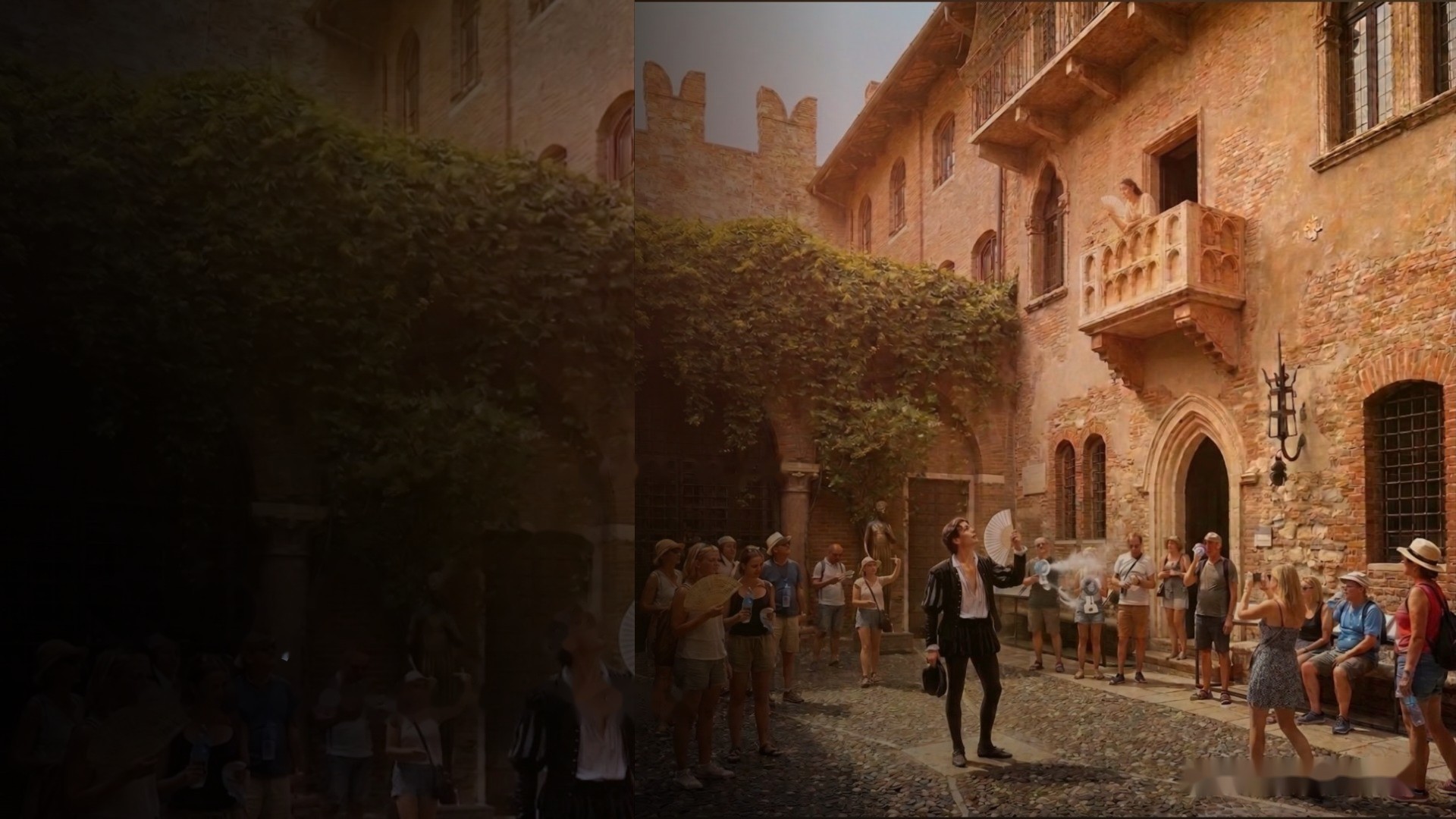
Armaroli and Pievani in Corriere della Sera: adaptation and mitigation are not alternatives. That is what Micro Digital Twin, the urban digital twin that simulates cooling for public squares, is about. It will be presented on 25 November at Job&Orienta.
A false choice
Today in Corriere della Sera, Nicola Armaroli, research director at Italy’s CNR, and Telmo Pievani, professor at the University of Milan, reply to those who read the failure of COP31 in Antalya as a reason to give up on cutting emissions and focus only on adaptation. Their headline is blunt: «No, we will not get out of the climate crisis with air conditioning».
For the authors, adaptation and mitigation are both essential. Giving up on mitigation, they write, is like treating an infection only by lowering the fever: symptoms ease while the disease advances. «We can adapt, within limits, to a changing climate. But we cannot adapt indefinitely to a climate we keep changing.»
Air conditioners, they acknowledge, can save lives during heatwaves. But they do not stop rising seas, drought or melting glaciers. They also cite a study published in Nature Health: across 854 European cities, over 50,000 estimated heat deaths in summer 2026, compared with about 28,500 in 2003.
What happened at COP31, and why it matters to us
COPs, the «Conferences of the Parties», are the annual summits where almost every country in the world, under the UN climate change convention, tries to agree on how to tackle the crisis. It was at a COP, in Paris in 2015, that the world set the goal of keeping global warming well below 2 °C, aiming for 1.5 °C. Since then each summit is meant to raise national emission-reduction pledges, which today are still not enough to meet that goal.
COP31 in Antalya, Turkey, is being read as a failure on exactly this point: it did not deliver the leap in ambition needed on cutting emissions. Hence the temptation that Armaroli and Pievani push back against: if we cannot reduce CO₂, we might as well focus on adaptation, defending ourselves from the heat, floods and droughts that are coming anyway.
Put simply: mitigation acts on the cause (fewer greenhouse gases, less future warming), adaptation on the effects (cities, homes and land better able to cope). Betting only on the second means accepting a climate that keeps getting worse and chasing it with ever more expensive defences. That is why air conditioning becomes the perfect symbol of the problem.
Adapting better, not just more
This is where, reading the piece, a light went on for us: this is exactly the problem Micro Digital Twin sets out to solve. When adaptation is needed, it should not worsen what it aims to treat. An air conditioner cools a room, uses energy and pushes heat into the street. But you cannot air-condition a square, a street or a school yard: they need different, smarter answers.
There is also a vicious circle. The hotter it gets, the more we switch on air conditioners; the more we use them, the more energy we consume and, until that energy is clean, the more emissions we produce. Meanwhile each unit dumps outdoors the heat it removes indoors, and city streets get even hotter: this is the «urban heat island» effect, where asphalt, concrete and a lack of greenery make city centres hotter than the surrounding countryside, especially at night.
Shade, trees, greenery and light-coloured surfaces are passive cooling tools. They reduce sun exposure and heat build-up, and can work alongside emission cuts instead of contradicting them. The practical question for a municipality or a designer is different: which combination to choose, what it costs and what it delivers, before opening a building site?
Micro Digital Twin: simulate before you act
Here is the idea, simple and powerful: test the city before changing it. That question is where Micro Digital Twin starts: an urban digital twin built by the Fondazione ITS DEMOS Academy team with Annoluce ICT Consulting. Users select an area on the map, add trees, greenery, shade structures and misting devices, compare scenarios and export a report.
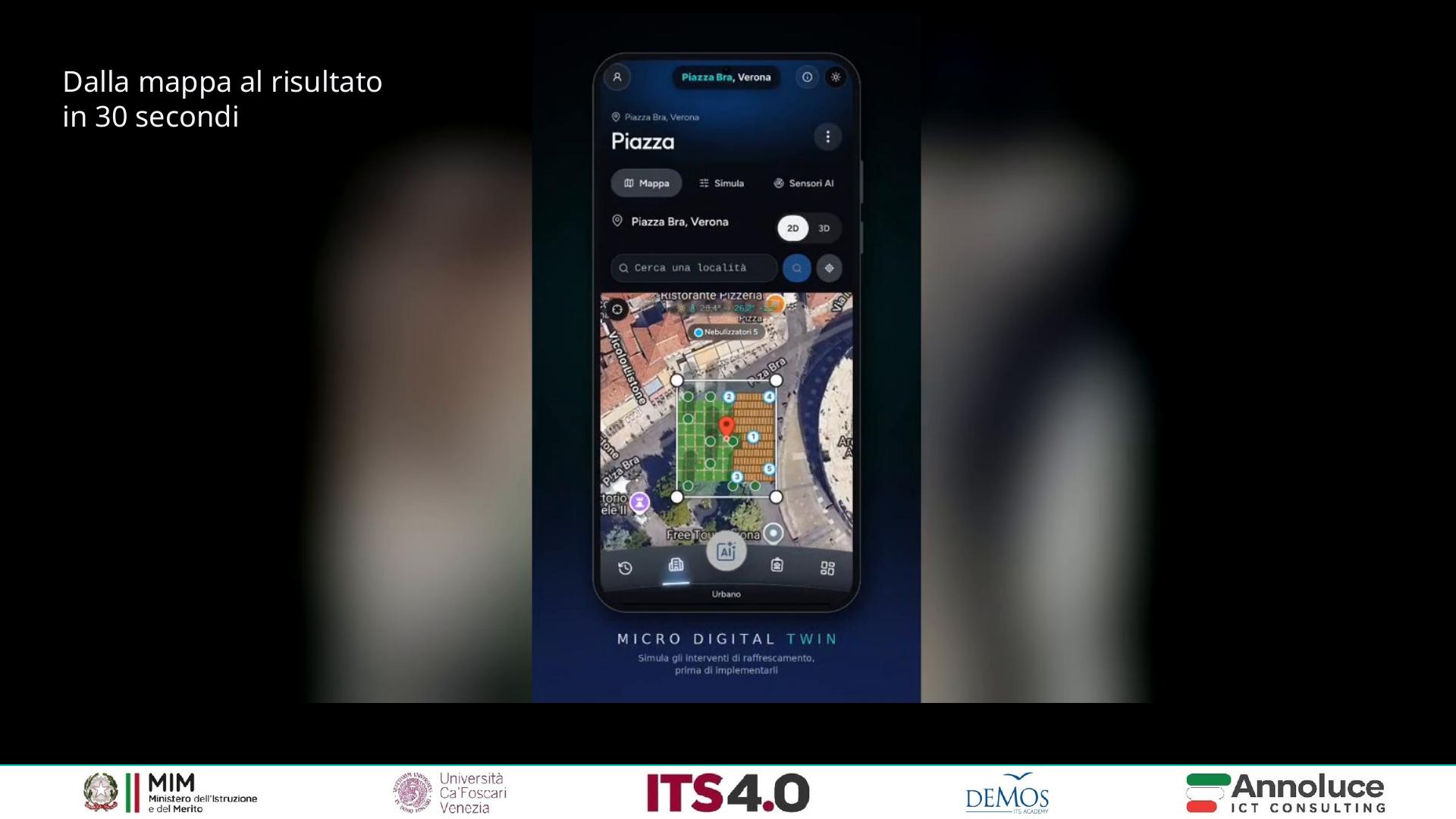
Micro Digital Twin
The full project: goals, the Piazza Bra scenario, team, slides and access to the app trial.
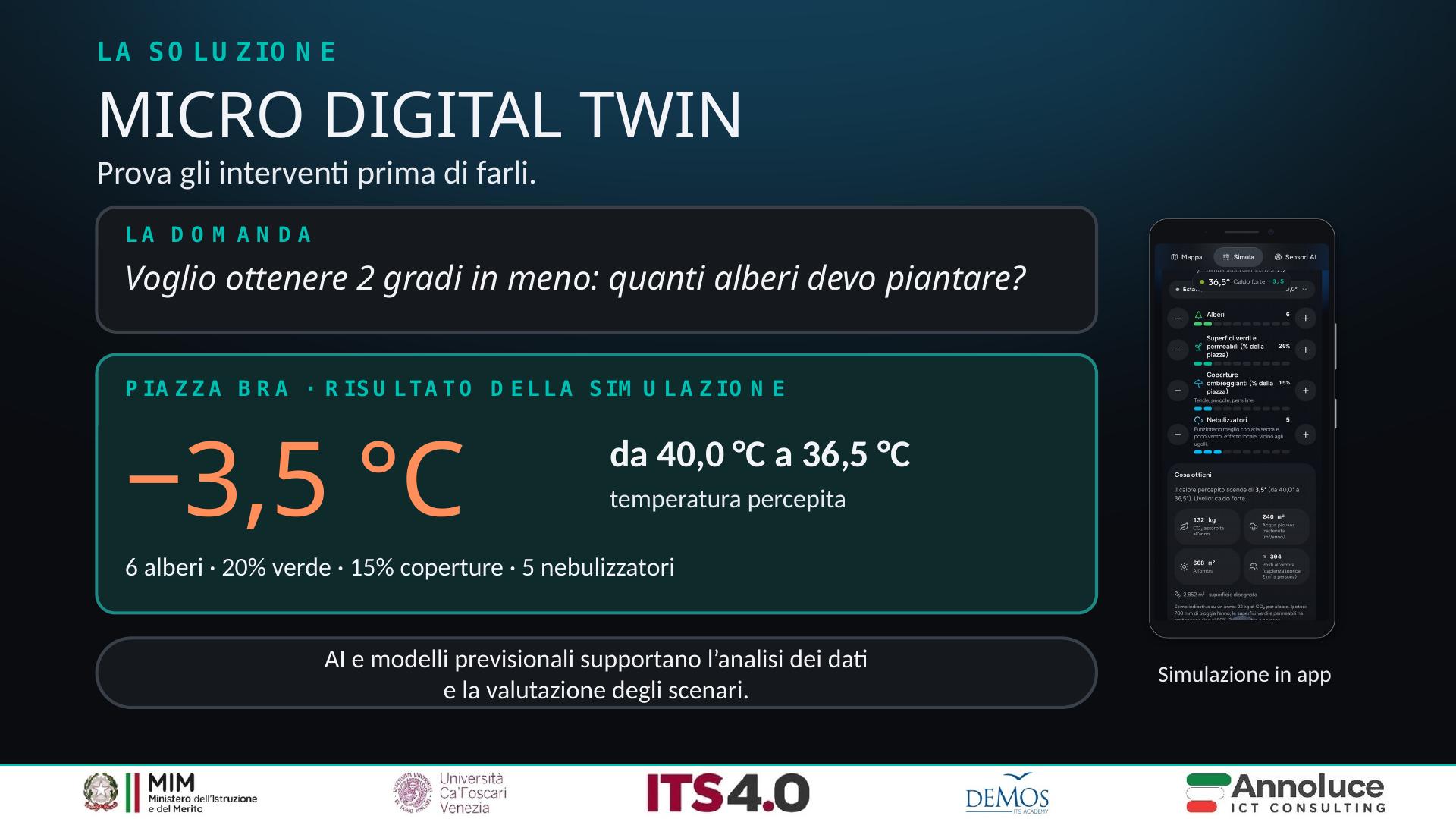
Explore the projectIn the presentation, a scenario for Piazza Bra in Verona, with six trees, 20% greenery, 15% shade and five misting devices, lowers the simulated perceived temperature from 40.0 °C to 36.5 °C: three and a half degrees cooler without a single air conditioner. It is a simulation, not a measurement after completed works, and that is the beauty of it: decisions are made before spending, with the numbers on the table.
The tool is designed for municipal technicians, public authorities, architects, engineers, urban planners and green-space managers who must justify costs and benefits, for example before a tender.
The idea born between ITS DEMOS and Annoluce
It starts with a sentence anyone working in a town hall has heard at least once: «I want this square two degrees cooler: how many trees should I plant?». Today that question is often answered by instinct, with a project already decided, or with long and expensive studies. Students at Fondazione ITS DEMOS Academy, supported by Annoluce as partner company in the ITS 4.0 programme, set out to turn it into a tool anyone can use.
The roles are clear: the ITS team studied the problem, gathered the data and built the prototype; Annoluce brought ICT experience, a development method and a market perspective. Talking to potential users revealed the decisive need: a technician does not just need to know «how much it cools», but must document thermal benefits and costs before a tender. That is why the app exports a scenario report, ready to attach to a council decision or a funding application.
The beauty of it is that Micro Digital Twin holds together both halves of Armaroli and Pievani’s argument. It is adaptation, because it makes squares liveable during heatwaves. But it is adaptation that adds no emissions: trees and greenery absorb CO₂, while shade and light surfaces use no energy. In other words, we do not fight heat by producing more heat.
The journey does not end in Verona. The team plans a meeting with TECNALIA in Bilbao in January 2027, an Alpha version in February and a Beta with pilot users in June, followed by AI/IoT sensors, camera input, before/after 3D views and collaborative work. This is how we like to innovate: start from a real problem and have it solved by people about to enter the workforce.
Tomorrow in Verona, at the ITS 4.0 Challenge
On Wednesday 25 November, Micro Digital Twin will be presented at Job&Orienta in Verona, during the final event of the ITS 4.0 Challenge organised by the ITS 4.0 team at Ca’ Foscari University of Venice, in Sala Verdi.
After institutional greetings at 2 pm, from 2.25 pm the ITS academies will present their projects by sector, three minutes each. Voting opens at 5.13 pm: each academy casts three preferences on a dedicated platform. Winners will be announced by Antonietta Zancan and Stefano Micelli at 5.24 pm.
Three minutes to share a simple idea: we tackle the climate by cutting emissions and, at the same time, adapting cities intelligently. Simulating before building is one way to do it while spending better. We are proud of these young people and cheering them on: go team!